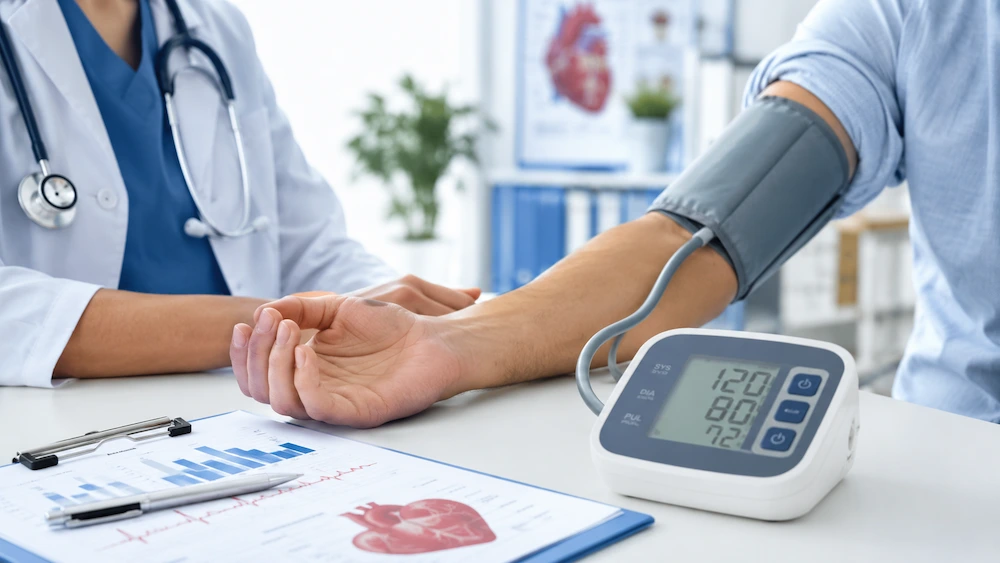
Blood pressure is one of the simplest heart-health measurements, yet it tells us a great deal about the workload placed on the heart and arteries. It is written as two numbers: systolic pressure, the top number, and diastolic pressure, the bottom number. The systolic number reflects pressure when the heart pumps. The diastolic number reflects pressure while the heart relaxes between beats.
High blood pressure often has no symptoms. That is why it is sometimes called a silent risk factor. A person may feel completely well while the arteries, kidneys, brain, and heart are being exposed to extra strain for years. Regular measurement is therefore more useful than waiting for symptoms.
How to measure at home
Use a validated upper-arm cuff, sit quietly for five minutes, keep both feet flat on the floor, and support the arm at heart level. Avoid caffeine, exercise, and smoking for at least 30 minutes before checking. Take two readings one minute apart and write them down with the date and time.
One high reading does not automatically mean a diagnosis, especially after stress, pain, poor sleep, or rushing. A pattern matters more. Bring a home log to your clinic appointment so your doctor can compare office readings with daily life.
Why control matters
Better blood-pressure control lowers the risk of stroke, heart attack, heart failure, kidney disease, and vascular complications. Lifestyle changes are powerful: reduce excess salt, maintain a healthy weight, move regularly, sleep well, limit alcohol, and take prescribed medicines consistently when they are needed.
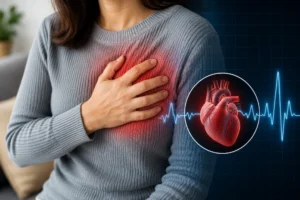
Seek urgent medical care if very high blood pressure is accompanied by chest pain, severe headache, shortness of breath, weakness, confusion, vision loss, or fainting. This article is educational and does not replace assessment by your clinician.
Medical disclaimer: This article is for general health education only. It is not a substitute for consultation, diagnosis, or treatment from a qualified clinician. If symptoms are severe, new, or worsening, seek urgent medical care.