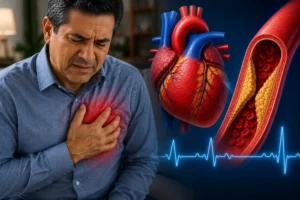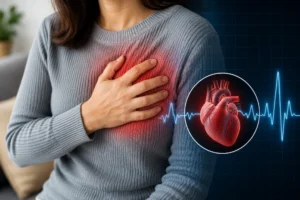
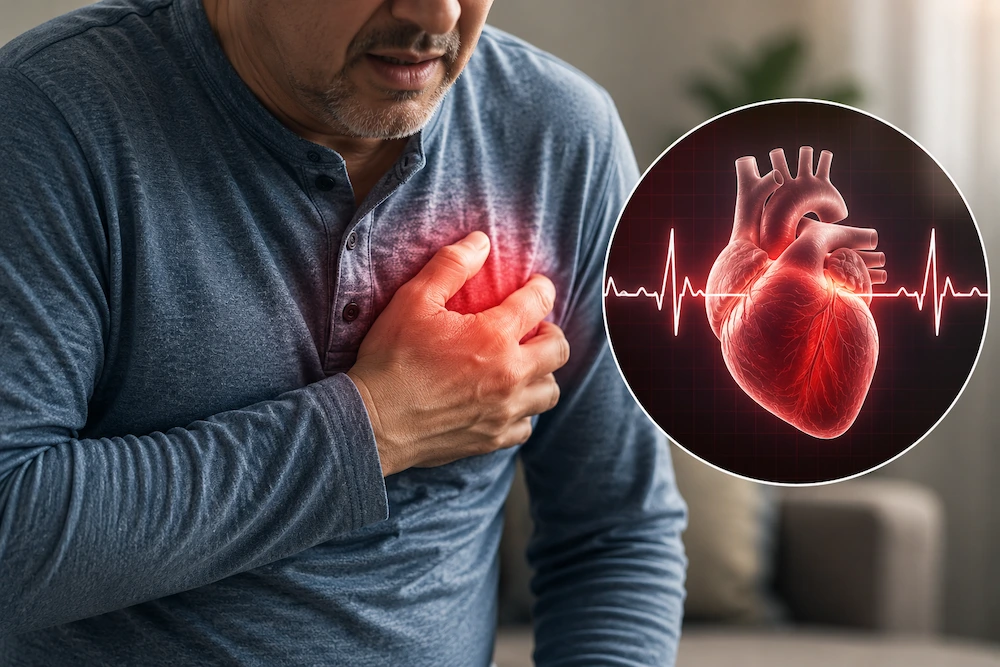
Chest pain can come from muscles, ribs, reflux, anxiety, lungs, or the heart. Because heart-related pain can be life-threatening, it is important to recognize patterns that should never be ignored. A heart attack does not always feel like dramatic pain. It may feel like pressure, heaviness, tightness, burning, or squeezing.
Pain or discomfort that appears with exertion and improves with rest is especially concerning. Discomfort spreading to the left arm, both arms, jaw, neck, back, or upper abdomen can also suggest a cardiac source. Shortness of breath, sweating, nausea, faintness, or a sense of doom may accompany the discomfort.
Symptoms can be subtle
Older adults, women, and people with diabetes may have less typical symptoms. They may report unusual fatigue, breathlessness, indigestion-like discomfort, dizziness, or reduced exercise tolerance rather than classic chest pain. New symptoms deserve attention, particularly when cardiovascular risk factors are present.
When to act immediately
Seek emergency care now if chest discomfort is severe, lasts more than a few minutes, returns repeatedly, occurs with shortness of breath, sweating, fainting, weakness, or radiates to the arm, jaw, neck, or back. Do not drive yourself if a heart attack is possible.
Clinic evaluation may include an ECG, blood tests such as troponin, echocardiography, stress testing, or coronary imaging depending on the situation. The safest path is early assessment. It is better to be checked and reassured than to miss a heart problem.
This post is general education. Any new, severe, or worrying chest symptom should be assessed by a qualified medical professional.
Medical disclaimer: This article is for general health education only. It is not a substitute for consultation, diagnosis, or treatment from a qualified clinician. If symptoms are severe, new, or worsening, seek urgent medical care.